
Plymouth Warrant Checks
Only the clerk's office can confirm a warrant. Plymouth Police can serve one, but they cannot cancel it. The sheriff's offices nearby keep no court dockets, so a call there will not settle a Plymouth warrant check either way.
- Read the notice for a docket number, a citation number, and the court that issued it.
- Search the Trial Court's public case site by that exact number, choosing District Court and the Plymouth division.
- Call the clerk at 508-747-8400 and ask whether the case shows a default or warrant.
- Ask what the court needs next, and whether a hearing, a motion, or an appearance is required.
- If the question concerns a police record instead, use the department's own records officer.
A Superior Court notice points to Brockton, not Obery Street. A family or support notice at Obery Street belongs to a different registry in Plymouth. The address alone will not tell you which office to call, so check the court name too.
Plymouth Police Enforces Judicial Warrants
The department's stated policy is simple. Plymouth Police will enforce a criminal judicial arrest warrant issued by a court. That is the full extent of its role: officers carry out the order and leave the record itself to the issuing court.
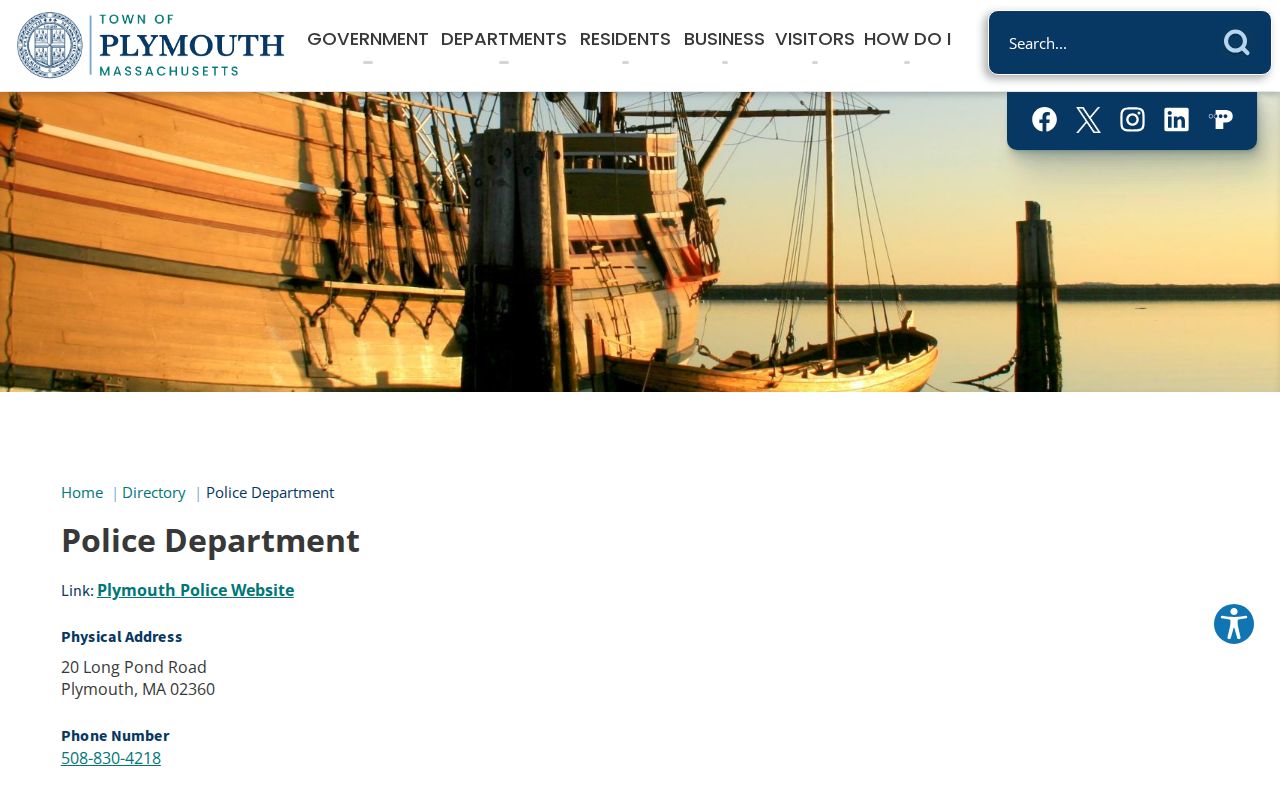
The Plymouth Police directory page gives the station address and business line, which helps with a police record but not with a court status. The department posts no warrant search form and no active warrant list on its public pages. That is normal here. It does not mean Plymouth Police stay out of warrant service.
Policing and Courts in Plymouth
Plymouth has a town police department plus two court registries in a single Obery Street building. Each office keeps a different set of records, so the desk you pick determines how fast you get an answer.
Plymouth Police Department
20 Long Pond Road, Plymouth, MA 02360. Department business and police records. Officers enforce judicial warrants and do not recall them.
508-830-4218
Plymouth District Court
52 Obery Street. The clerk-magistrate's office holds the criminal, motor-vehicle, and bylaw files for the town and seven neighboring communities.
508-747-8400
Plymouth Probate and Family Court
The same Obery Street address, a separate registry, and a separate set of access rules for support and family matters.
508-747-6204
The Plymouth District Court building offers free parking, wheelchair access, and public Wi-Fi. The courthouse page posts the current hours.
Plymouth Warrant Dockets at Obery Street
This courthouse serves Duxbury, Halifax, Hanson, Kingston, Marshfield, Pembroke, Plymouth, and Plympton. For a Plymouth resident holding a court notice, it is the usual destination, and its official page confirms the details.
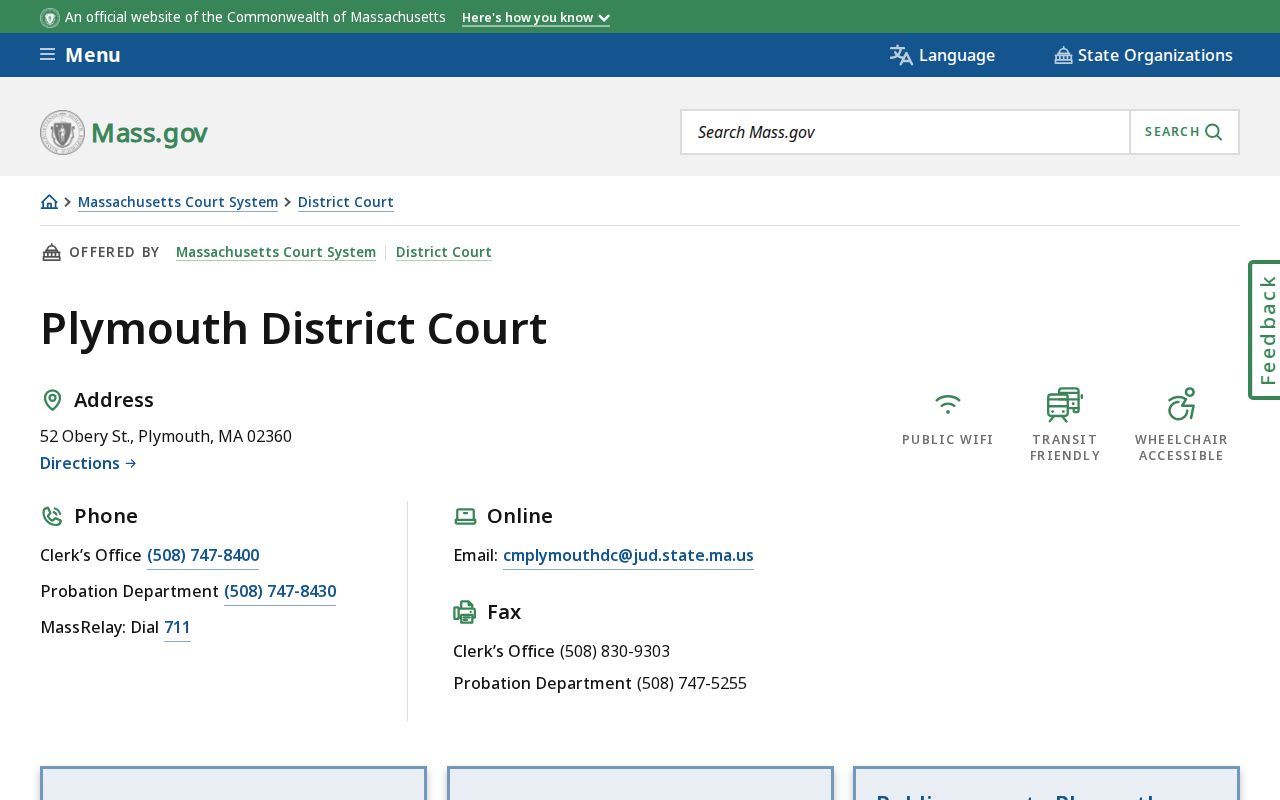
The Plymouth District Court page lists the clerk's line, the service towns, and the building details. The court also runs Adult Drug Court and Mental Health Court sessions. Those sessions serve people already in the system, and neither one creates a separate warrant list or counter.
Warrants in Plymouth: The Main Types
Cases in Plymouth produce the same handful of warrant types you find across the county. The type on the paper decides what the court may ask of you next.
| Warrant Type | How It Arises | Who Issues It |
|---|---|---|
| Default warrant | A missed court date or an unpaid court obligation | The judge handling the case |
| Arrest warrant | A criminal complaint supported by probable cause | A judge or clerk-magistrate |
| Traffic or bylaw warrant | An unanswered citation or a local ordinance matter | The District Court division |
| Probation warrant | An alleged violation of probation conditions | The court, on a probation request |
| Family or support process | A contempt or support matter in the Probate and Family Court | That court, through its own registry |
A search warrant is a different document altogether in Plymouth. It authorizes a search, not an arrest, and it plays no part in a warrant lookup at the clerk's counter.
The Town Tax Warrant on Plymouth's Calendar
Plymouth's Treasurer and Collector posts warrant commitments for boat and motor-vehicle tax bills. The word matches the courts' word, but the meaning is nothing alike. A tax commitment is a municipal finance record, pure and simple. Pay it or dispute it through the town, since any Registry consequence tied to it is a separate administrative matter that no court clerk can lift and no police department can look up. The Plymouth bill information page explains how the town handles these accounts. One quick test sorts the paper in your hand. If it names a court date, treat it as a court matter in Plymouth. If it names an excise account, call the town.
Plymouth Warrant Records: What They Show
A Plymouth court file is short, and a few fields carry nearly all the weight. Copy the case number exactly before you call the clerk.
| Docket or Citation Number | The field the clerk searches by, formatted like 24-XX-002744. |
|---|---|
| Court Department and Division | District Court, Plymouth division, for most town cases. |
| Case Type | Criminal complaint, motor-vehicle citation, or local bylaw matter. |
| Charging Agency | Plymouth Police in most town cases, or another department in a regional case. |
| Default or Warrant Event | The docket entry showing what the court did after the missed date. |
| Bond or Amount Owed | Any figure the court set, which may also be required at release. |
| Current Status | Confirmed by the clerk, because the public docket may not display it. |
Bring the notice, the number, and identification if the court asks you to appear.
Plymouth Town and Police Records Officers
Public records in Plymouth run on two tracks. The town's records page names a records access officer and offers FOIADirect as the easiest way to file, with mail and in-person requests going to 26 Court Street. The police department keeps its own records access officer for anything the department holds, so a request aimed at the wrong office gets routed rather than answered. The town public records page lays out every submission choice. Ask for an existing document, and narrow it by date and record type instead of requesting every Plymouth record that mentions a name. That keeps the request answerable.
Plymouth Probate Court Warrant Routes
The Probate and Family Court shares 52 Obery Street with the District Court, yet it keeps its own registry. Support, custody, and contempt matters in Plymouth follow family procedure, not criminal procedure. The difference is practical. A support or contempt process may be served by the sheriff's Civil Process division, but the recall decision still belongs to the court that issued the order. The sheriff is only the messenger. The Probate and Family Court page lists the registry line and the virtual registry contact for questions about a family file in Plymouth.
Plymouth Warrants and Plymouth County
Plymouth is the county seat, so the county offices sit close enough to confuse. The roles stay separate even when the addresses are next-door neighbors.
Warrant flow: Plymouth Police › Plymouth District Court › Plymouth County Sheriff for custody and civil process › state licensing or parole agencies where a notice applies.
The sheriff's administrative office and the correctional facility hold no court docket. The Superior Court sits in Brockton. For a county-wide view of who holds what, the Plymouth County warrant records overview covers the remaining offices.
Plymouth's Three Long Pond Road Addresses
Three offices share one Plymouth road, and only one of them is a police department. Plymouth Police works from 20 Long Pond Road. The sheriff's administrative office sits at 24 Long Pond Road. The correctional facility next door uses 26 Long Pond Road. Their jobs stay distinct: the sheriff handles corrections, Civil Process, and records, while the facility holds people already in custody and manages their release. None of the three can recall a court warrant. The sheriff's department page posts the administrative address and hours, so confirm those before you drive over.
Accessing Plymouth Warrant Records
Plymouth court files and town files each close off some material. Sealed cases, juvenile matters, and search-warrant papers before their return stay beyond ordinary public access.
Key rules:
Massachusetts Public Records Law, G.L. c. 66, s. 10 covers requests to the town and to the police department.
Trial Court Rule XIV governs access to court records and lists what is excluded.
CORI law controls criminal offender record information separately, with its own request route.
Plymouth clerks accept narrow requests for a policy, a blank form, or an existing dated record. None of them can force certification of a live warrant status.