
How Bench Warrants Work in Plymouth County
A bench warrant is a judge's order to bring a person before the court, and in Plymouth County it usually grows out of something small: a date nobody showed up for. Massachusetts courts respond by entering a warrant or a default on the docket. Officers then get the paperwork to execute it. Nothing beyond that is automatic, and the court can withdraw the warrant later. The wording on your notice controls what happens next. Check whether it says default warrant, failure to appear, probation warrant, or warrant recall, and quote that exact label when you call the clerk. Note: a bench warrant is court process, not a new criminal charge filed by a police department.
The Massachusetts Term Is Default Warrant
Massachusetts public materials rarely say bench warrant. The preferred terms are default warrant, failure to appear, probation warrant, and warrant recall. A money obligation can also count as a default in Plymouth County, and then the warrant may list the amount owed, with release conditioned on paying it as bail. That vocabulary gap trips people up. Someone hunting a bench warrant can scroll right past a docket entry labeled default, while someone assuming a default is only about money can miss a skipped appearance entirely. Have the clerk translate the label for you instead of guessing from a website.
Bench Warrant Issuance in Plymouth County
In Plymouth County, a judge issues a bench warrant once the docket shows someone stopped complying. The usual triggers are plain: a missed arraignment, a skipped pretrial date, or a no-show at probation. Failing to follow a release condition counts too, as does an unpaid court obligation. Cases tied to restraining or harassment orders work a bit differently. Those carry their own instruction that a warrant should issue promptly when a defendant fails to appear or violates the order. After the judge signs, the clerk's office enters the warrant so officers can act on it. That entry is why warrant status can change fast in Plymouth County. An old docket page tells you very little about what stands today. A warrant stays in the court system until the issuing court recalls or removes it.
Plymouth County Bench Warrant Court Routes
Your town decides the courthouse. Hanover, Hingham, Hull, Norwell, Rockland, and Scituate route to Hingham District Court at 28 George Washington Boulevard, reachable by the Greenbush line and about a mile from Nantasket Junction.
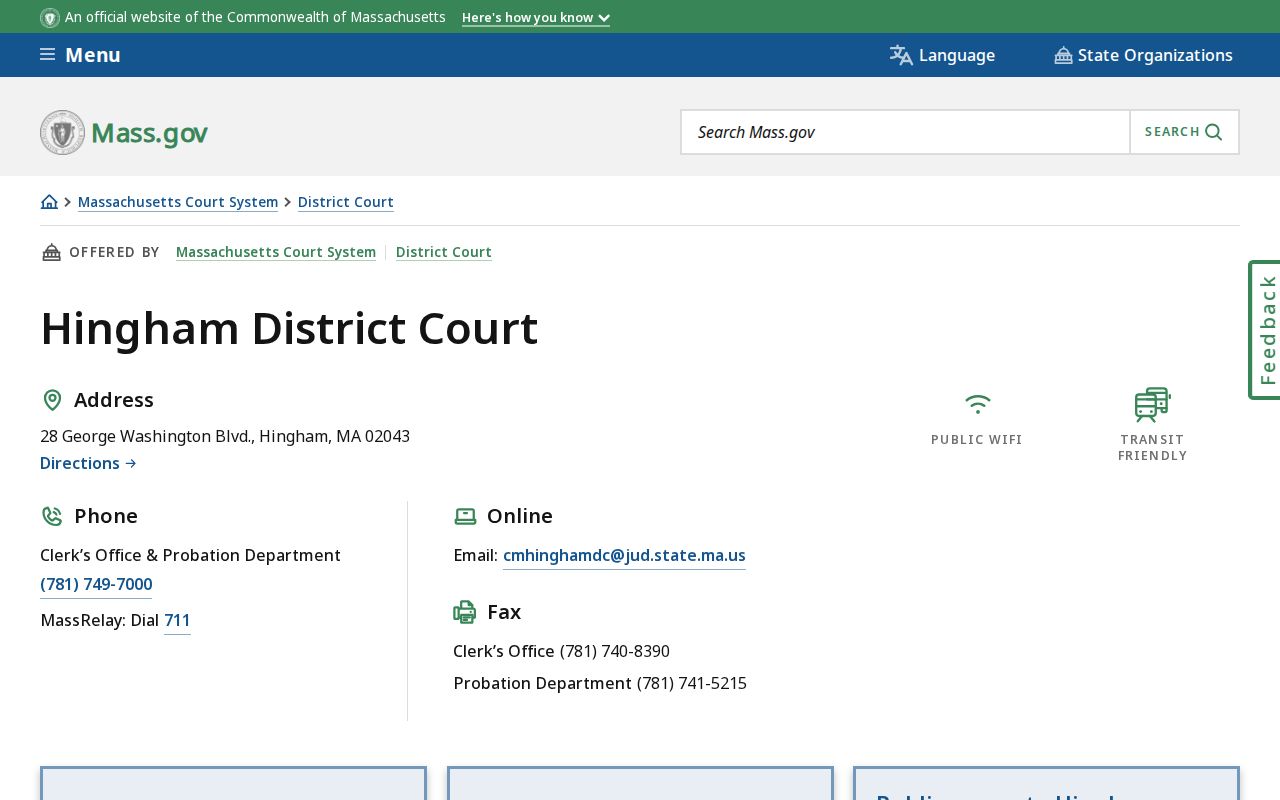
The Hingham District Court page lists the clerk's line and access details, but the call matters more. The other divisions split the rest of Plymouth County. Brockton handles Abington, Bridgewater, Brockton, East Bridgewater, West Bridgewater, and Whitman. Plymouth handles Duxbury, Halifax, Hanson, Kingston, Marshfield, Pembroke, Plymouth, and Plympton. Wareham handles Carver, Lakeville, Marion, Mattapoisett, Middleborough, Rochester, and Wareham.
How Bench and Arrest Warrants Differ
People use the two labels as if they were one thing. They are not. A bench or default warrant grows out of a court obligation in Plymouth County, while an arrest warrant authorizes custody on a criminal complaint or indictment after a probable-cause finding.
| Point | Bench or Default Warrant | Arrest Warrant |
|---|---|---|
| What starts it | A missed date, a violation, or an unpaid obligation | A complaint or indictment with probable cause |
| Who issues it | The judge handling the underlying case | A judge or magistrate as the case is charged |
| Typical first step | Ask the clerk about default removal and recall | Consult counsel before any appearance |
| Release question | Can turn on a judge, especially for probation | Set through the bail and arraignment process |
Public conversation blurs the labels. The docket controls, so ask the clerk in Plymouth County which type you face before planning anything.
Bench Warrant Recall Limits in Plymouth County
The Plymouth County Correctional Facility at 26 Long Pond Road is staffed around the clock, and its visitor booklet covers security, mail, and release routines. None of that makes it a warrant counter. Staff can explain custody and release procedures for someone already held, but they cannot withdraw a court order. The sheriff's administrative office at 24 Long Pond Road is a separate address with a separate job: records, Civil Process, and field services. The correctional facility overview describes the mission and contact route rather than any lookup service.
Clearing a Bench Warrant in Plymouth County
Only the issuing court can clear a default warrant in Plymouth County, and the route depends on the case. Massachusetts publishes one worked example for jury-duty defaults: call or visit the issuing clerk-magistrate during regular business hours and request default removal and warrant recall. Criminal, probation, and family matters may need a motion, a hearing, a payment, or a judge's order.
Ask what an appearance could trigger before you go. A clerk can explain the process, but no court employee can promise that a walk-in will not end in custody.
- Confirm the court, division, and docket number with the clerk.
- Ask what the court requires: a scheduled session, a motion from counsel, a payment, or an appearance.
- Bring identification, the notice, and proof of any excuse or corrected identity.
- Ask whether the warrant was reported to another agency, including any licensing consequence.
- Request written confirmation of the recall and keep it with your receipts.
Massachusetts also warns that a warrant tied to identity theft cannot be recalled by telephone. That situation needs court action in Plymouth County, and usually a lawyer.
Plymouth County Bench Warrants in Probate Court
Family support, custody, and contempt matters run on a different track from criminal complaints. The Probate and Family Court shares 52 Obery Street with Plymouth District Court, yet its registry keeps its own files for Plymouth County.
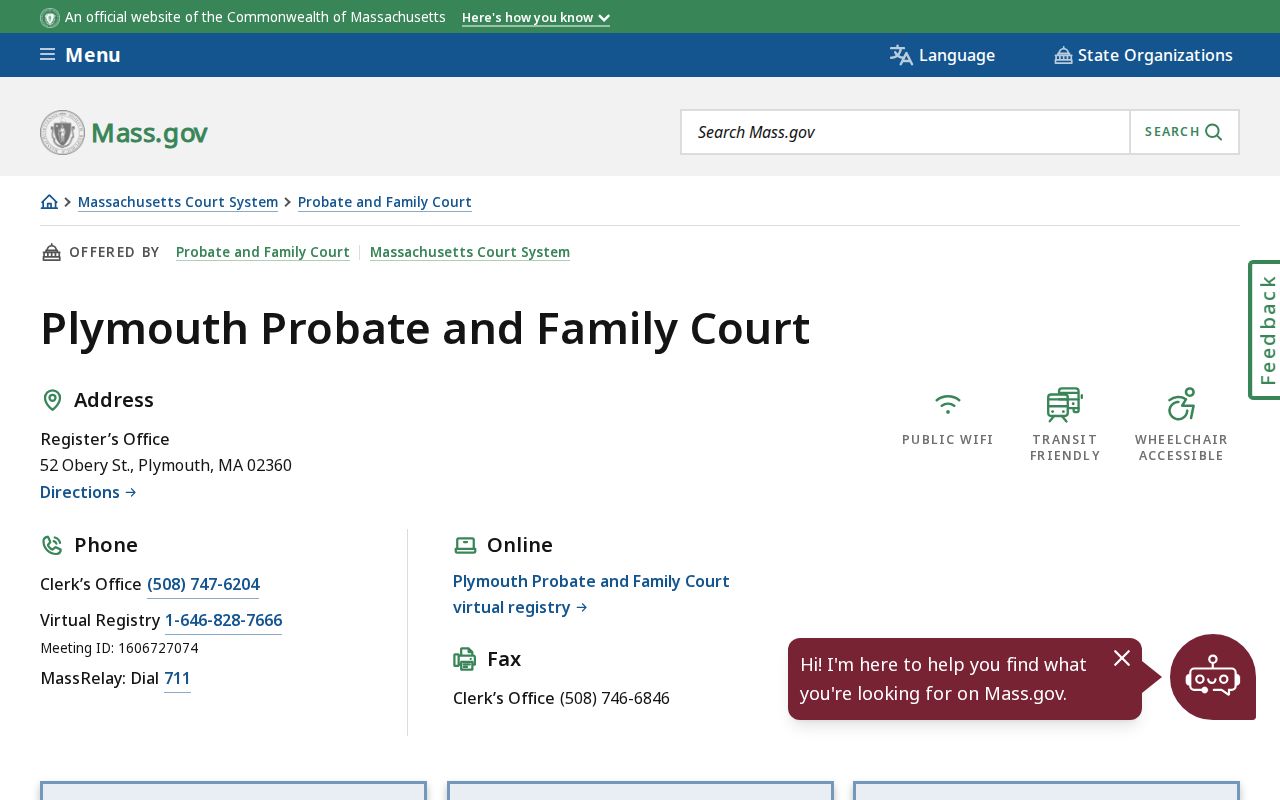
The Probate and Family Court page lists the registry and virtual registry contacts, and those are the right numbers for a family process question. Civil support papers may be served by the sheriff's Civil Process division. The recall decision still sits with the court, even in Plymouth County.
Plymouth County Courts That Issue Bench Warrants
Plymouth County runs four District Court divisions, and together they issue most of the default warrants a local reader runs into. Indicted cases are different. Those move to the Superior Court clerk after arrest. Probation warrants circle back to whichever division supervises the probation.
- Default warrant
- The usual Massachusetts label for a warrant issued after a missed court appearance or an unpaid obligation.
- Default removal
- The court step that takes the default off the docket and often precedes a recall.
- Probation warrant
- A warrant sought after an alleged probation violation, where release may require a judge.
- Warrant recall
- The issuing court's act of withdrawing an active warrant.
- Warrant Management System
- The Trial Court's internal system where warrant entries are kept for courts and law enforcement.
A Plymouth County docket can stay silent even when a warrant lives. No entry does not mean the court recalled it.
Default Warrants for Money Owed
Unpaid fees and fines are one route to a default warrant in Massachusetts, and the warrant can list the amount owed. A judge may then set that figure as bail before release. Each court holding the case sets its own terms, so no countywide schedule exists in Plymouth County. Ask three questions when money is involved. What is the current total? Which payment methods does the court take? Does paying alone recall the warrant, or must a clerk or judge act afterward? The state's bail conditions page explains how default amounts and release conditions connect. Keep your receipt and confirmation. A payment you cannot document is hard to prove later, and the county warrant overview walks through the rest of the resolution route.